Summer school students learn about STEM fundamentals


Summer school students learn about STEM fundamentals
July 27, 2022

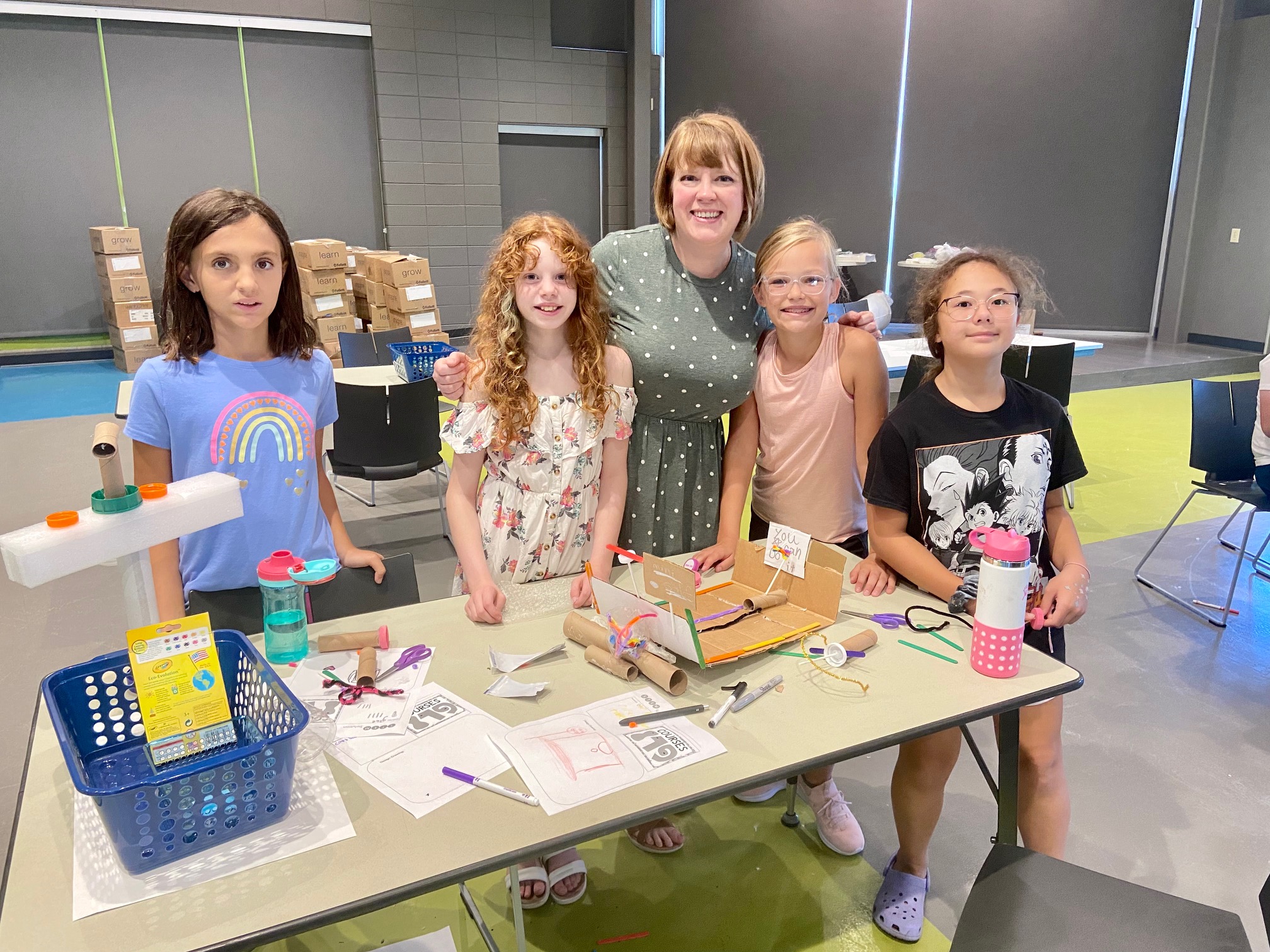
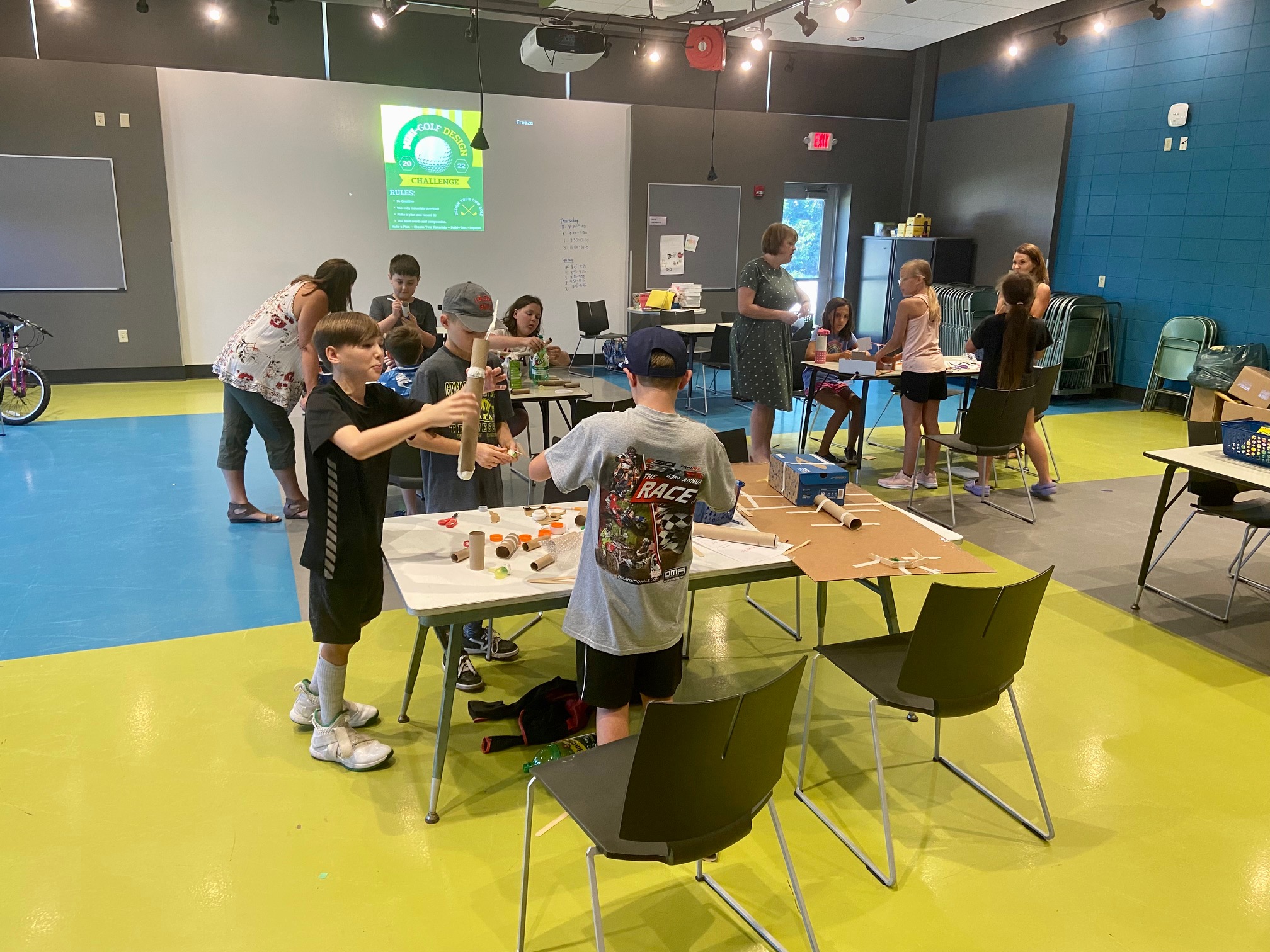
The fifth graders participating in a mini-golf design challenge had four simple rules: Be creative, use only materials provided, make and record a plan, and use kind words and compromise.

Shortly after Sara Bertelsen, a biology teacher at Geneseo High School, provided an introduction based on STEM principles (science, technology, engineering and mathematics), the summer school students in attendance thanks to ESSER III funding raced to gather their materials and got to work.

Each group’s design was creative and unique, and Bertelsen, who wanted her class to gain an early understanding of the engineering design process and growth mindset, was pleased with the results.

“Before the students started building, we discussed what an engineer does and I tried to emphasize the idea of problem solving, testing, and rebuilding if things don’t go as planned,” Bertelsen explained. “I heard a lot of great conversations between students using STEM terms.”

The STEM classes were held during summer school classes for kindergarten through sixth grade at Millikin Elementary. While Bertelsen normally teaches at GHS, she previously coached LEGO League teams with fourth through seventh graders. Being in a classroom with the younger students, however, was a new experience for her.

“I spoke with a few lower elementary teachers and was given great advice to make sure I have plenty of things to do to keep them engaged,” Bertelsen explained. “Luckily, STEM lends itself well to being naturally engaging so I was able to rely on that, too.”

Other summer school projects from the first week of Bertelsen’s STEM classes included kindergarten students being tasked with designing and building a spoon to help Grumpy Toad (a character from the book “Pete the Cat and the Missing Cupcakes”) make new cupcakes; first and second graders reading the book “Peg & Cat and the Pizza Problem” and figuring out how to get pizzas home on a bicycle; and third and fourth graders taking the pizza problem one step further by coming up with a way to also transport ice cream—without melting and spilling.

This week, her classes will work with a set of small robot cars called Sphero Indi—purchased thanks to a grant from the Geneseo Education Foundation—to learn how the cars respond to their different color tiles, while the third through sixth graders will work with similar but more sophisticated robots aimed to provide simple driving and coding choices for early learners.

Bertelsen sees great value in not only offering STEM-focused classes for all ages, but also tying those principles in to the bigger educational picture.

“I think it is important for students to be exposed to a learning environment that encourages collaboration and recognition that STEM really is everywhere,” Bertelsen stated. “It doesn’t need to be a specific STEM class at all grade levels, but the cross curricular connections are incredibly powerful.

“It shouldn’t be a one-and-done situation in which we say, ‘Well, we’ve done our STEM for the quarter, so we’re done now,’” Bertelsen added. “Instead, we should consistently incorporate experiences that encourage the use of inquiry-based learning, technology, and the engineering design process within our current curriculum.”

Bertelsen’s hopes may soon become a reality. Geneseo’s school district is planning to extend STEM opportunities throughout its buildings in the coming years—including as an element of Project Lead the Way—thanks in part to multiple grants from local foundations.

Future updates about the STEM expansion initiative will be shared with stakeholders and the community once those plans are finalized and approved by the Board of Education.
Summer school students learn about STEM fundamentals

Pajama Program turns good nights into good days

Pajama Program turns good nights into good days

Getting a good night’s sleep comes with many benefits, and most health experts agree it is as important as a healthy diet and regular exercise.

For students, a comfortable and restful night of sleep often enables them to thrive the following day.

It’s with that in mind that a trio of Millikin Elementary School teachers—Mrs. Elizabeth George, Mrs. Lyndsey Shehorn and Miss Dana Storm—rallied their fourth graders to participate in raising pajamas for the 12th Annual Great Bedtime Story Pajama Drive.

Their students came through in a big way, collecting 156 pairs of pajamas, a 55% increase from the 2018-19 total of 101.

“It breaks my heart as a mother, a teacher and a human that not every child is promised a safe, loving and established bedtime routine,” said Mrs. Shehorn. “When I first learned about the pajama drive, I knew I wanted to get involved because it’s everything I am passionate about when it comes to kids.

Pajama Program turns good nights into good days

“There is also a learning and growth opportunity for our students through this drive,” noted Mrs. Shehorn, who hopes to make the pajama drive a school-wide initiative next year.

“Children develop and thrive on stability, safety, comfort and literature, shared with a loving adult,” Mrs. Shehorn continued. “It makes my heart so happy knowing our students, their families and our community members helped in providing others with some support for a good night, for a good day.”

For every pair of pajamas donated, Scholastic Book Clubs will donate a new book to the Pajama Program, a national 501(c)(3) nonprofit organization that promotes and supports a comforting bedtime routine and healthy sleep for children. As a partner of Millikin’s for the Pajama Program, Bethany for Children and Families in the Quad Cities will help provide 156 recipients with pajamas and a book.

Through the annual pajama drive, classrooms across America have collected and donated more than 850,000 pajamas since 2009. Scholastic Book Clubs has more than matched those numbers with a donation of more than 1.25 million books during that same period.

None of it would be possible without efforts like the one at Millikin. The Pajama Program relies on a national network of volunteers, donors and partnerships with 4,000 community-based organizations across the United States, including Puerto Rico, to achieve its mission.

“There is also a learning and growth opportunity for our students through this drive,” noted Mrs. Shehorn, who hopes to make the pajama drive a school-wide initiative next year. “They learn that some of the things we take for granted are some of the simple but invaluable components that others are missing in their lives. They realize very quickly that it doesn’t take a lot of money, time or a large initiative to make an impactful difference. These are lessons that just cannot be taught from a lesson plan.”

Millikin sock drive nets 721 pairs for local food pantry

Socktober

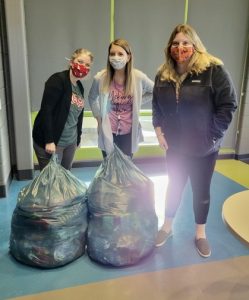
“We don’t get many new socks, so we were very much in need of them,” said Nicole Friedhoff, Assistant Director of the Geneseo-Atkinson Food Pantry. “There is a big need for a lot of items right now, and this really helps our cause.”


With colder weather on the way, families are beginning to dig through their closets for warmer clothing.

However, not all families have everything they need, and when it comes to what we wear, socks are among the least donated items.

Christy Sancken, a second-grade teacher at Millikin Elementary School, took note of this a few years ago and introduced Socktober, a sock drive that takes place during the month of October, to her students.

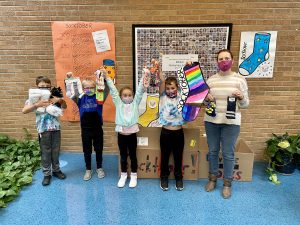
An initiative created by YouTube personality Kid President, Socktober is now in its fifth year at Millikin. While this year the goal was 300 pairs, students collected 721 pairs that were donated to the Geneseo-Atkinson Food Pantry on Friday.

Socktober

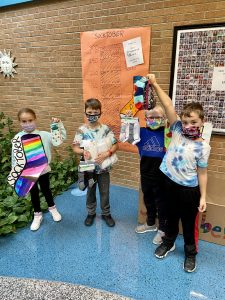
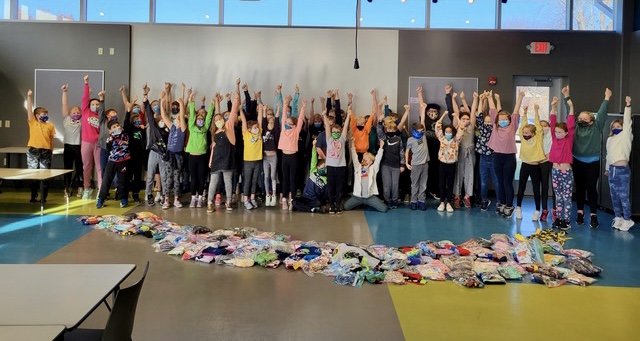
Students and teachers at Millikin gathered 721 pairs of socks during its fifth annual Socktober, a month-long sock drive that benefits the Geneseo-Atkinson Food Pantry.

“Throughout the month, whenever students would walk by the collection box and signage, they’d see the numbers on the rise and get excited,” said Mrs. Sancken. “They really bought into it and the socks kept coming.”

The sock drive also presented an opportunity for teaching and learning.

“My class helped count the socks and I incorporated that into math lessons with counting by tens and adding big numbers,” Mrs. Sancken explained. “It was very rewarding to see us hit our goal and then far surpass it.”

Nicole Friedhoff, Assistant Director for the Geneseo-Atkinson Food Pantry, was equally appreciative and impressed by the effort.

“I’m amazed at the generosity of the kids and families; it’s overwhelming,” stated Nicole Friedhoff, Assistant Director of the Geneseo-Atkinson Food Pantry. “Whenever we need something, our community comes through for us.”

Mrs. Sancken shared that sentiment and added, “It’s a testament to the families in our area and their willingness to help. It’s an easy thing to do, and it can really make a difference.

“Our district’s motto is to teach, learn and care,” Mrs. Sancken continued. “We didn’t want to put any pressure on the students or families by making it a contest. Not everyone is able to donate. We focused on a simple message—that the socks are needed, and that giving feels good.”